
From Vision to Reality: Outdoor Recreation Strategies for Tiny Towns and Downtowns
Outdoor recreation can be a powerful community development tool for Colorado’s small towns. Parks, trails, gathering spaces, and other outdoor amenities can improve quality of life for residents while also supporting economic vitality, attracting visitors, and helping communities build a stronger sense of place.
But for many small and rural communities, the challenge isn’t identifying what they want to build. It’s figuring out how to turn that vision into reality.
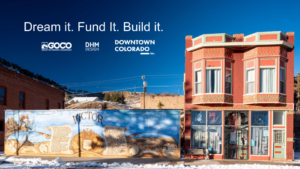
During Downtown Colorado, Inc.’s recent Dream It, Fund It, Build It webinar, representatives from Great Outdoors Colorado (GOCO) and DHM Design shared strategies and examples for moving outdoor recreation projects from an idea on a wish list to a completed community asset.
The good news? There isn’t just one path to success.
Start with a Community Vision
One of the strongest themes throughout the conversation was the importance of starting with a clear community vision.
A master plan can provide that roadmap. Rather than jumping immediately into a specific project, communities can use a planning process to identify their broader recreation needs, engage residents, and determine which projects should come first.
In Naturita, a GOCO-funded master planning process in 2018 helped the community identify Town Park as its top recreation priority. The planning process included extensive community involvement—including working directly with a fourth-grade classroom to envision what a future playground could look like.
That community input didn’t stop when the plan was finished. It continued through the funding and construction process.
The result was a major transformation of the 10-acre Town Park, incorporating a playground, walking trail, picnic shelter, strider track, ball fields, and river access. The project ultimately brought together funding from GOCO, the Land and Water Conservation Fund, the Colorado Water Conservation Board, local government, foundations, and local businesses.
For small communities, this approach can be especially valuable. A master plan doesn’t have to mean building everything at once. Instead, it can help establish a long-term vision and provide a framework for deciding what comes next.
Think in Phases
Victor offers another example of how a long-term vision can help communities make progress even when funding and capacity are limited.
The community began with a GOCO-funded Parks and Recreation Master Plan that identified eight priority sites. Rather than trying to tackle everything at once, Victor continued working toward those priorities over the next decade.
Five of the eight identified projects have now been built.
Projects included an outdoor ice rink, soccer field, picnic and gathering areas, playground improvements, and a plaza for community concerts and events. GOCO contributed more than $625,000 over the course of the effort, while other funding sources helped complete projects identified in the master plan.
For small towns, this phased approach can make a big difference.
As GOCO Southwest Regional Officer Mike Wight explained during the webinar, communities don’t necessarily have to raise every dollar needed for a project at once. Breaking a larger vision into “bite-sized pieces” can make projects more manageable and allow communities to build momentum over time.
The lesson from Victor is simple: a long-term vision doesn’t require a short-term implementation timeline.
Don’t Underestimate the Power of a Community Champion
Successful projects often have someone—or a group of people—who keeps pushing the idea forward.
In Naturita, local attorney and community advocate Sarah Bachman became a catalyst for the Town Park project. She helped convince the town to contribute $50,000, worked to secure matching contributions from the Telluride Foundation and San Miguel Power, and continued looking for additional funding opportunities.
That initial investment helped the community secure a $350,000 GOCO grant. Bachman then identified an opportunity to leverage the GOCO funding with a Land and Water Conservation Fund grant, ultimately bringing another $350,000 to the project.
Victor had its own community champion, Brian Hayes, who helped drive improvements throughout the community.
These examples demonstrate that funding is important—but so is having someone who is willing to keep asking, “What else can we do?”
For small communities with limited staff capacity, that champion might be a town employee, elected official, local business owner, volunteer, nonprofit, or community member. And if your community doesn’t have the capacity to do all of the grant writing or project management internally, outside technical assistance can also be part of the funding strategy.
Look Beyond a Single Funding Source
One of the clearest takeaways from the webinar was that communities shouldn’t think of grants as an either/or proposition.
Instead, successful projects often stack funding sources and partnerships.
GOCO’s Community Impact Grant program is one potential resource for planning and construction of parks, trails, and other outdoor amenities. GOCO also offers other programs supporting land acquisition, innovation and planning, youth and family recreation, and other outdoor projects.
But GOCO is only one piece of the funding landscape.
The case studies highlighted partnerships involving local governments, foundations, businesses, state and federal programs, and other funders. In the case of the Ute Mountain Ute Tribe’s project in Towaoc, multiple funders came together to help provide the match needed to make a GOCO application competitive.
This kind of collaboration can be particularly important for small and rural communities that may not have large local matching funds available.
The key is to start looking for partners early.
Your Project Doesn’t Have to Look Like a Traditional Park
Another important takeaway from the webinar: don’t assume your project is too unique—or too different—to be considered an outdoor recreation project.
In Ouray, a major renovation of the city-owned hot springs became a catalyst for broader recreation improvements throughout the community.
The $10.6 million renovation addressed significant structural and infrastructure needs while creating a variety of recreational experiences, including pools for different age groups, a climbing wall, and seasonal water activities. GOCO contributed $275,000 toward construction documents and implementation.
The project demonstrates how outdoor recreation can take many forms.
For one community, the priority might be a playground. For another, it might be a river access point, trail system, plaza, hot springs, ice rink, or gathering space.
The right project is the one that responds to your community’s needs and vision.
Keep the Community Involved—Even After the Grant Is Awarded
Community engagement shouldn’t end when the master plan is complete or the grant is awarded.
The Ute Mountain Ute Tribe’s project in Towaoc provides a powerful example of what continued engagement can look like.
The community’s Parks and Trails Master Plan involved extensive participation, including community events, surveys, stakeholder meetings, Tribal Council presentations, and engagement with more than 31% of residents.
That engagement continued into the design process.
Residents and youth helped select playground equipment, shade structures, site furnishings, and other elements. Community members also helped name the two new neighborhood parks: Quenach, the Ute Mountain Ute word for eagle, and Bear Paw Park.
This continued involvement helped build confidence in the project—particularly in a community where previous planning efforts had not resulted in construction.
As the project moved forward, residents could see that this time, the plan was actually becoming a reality.
That matters.
When people see their ideas reflected in a project, they are more likely to feel ownership of it, support it, and help build momentum for what comes next.
Treat Each Project as Momentum for the Next
Perhaps the biggest lesson from all four examples is that one project doesn’t have to be the finish line.
It can be the beginning.
A successful park improvement can lead to new trails. A master plan can help unlock future grants. A new gathering space can create opportunities for events and downtown activity. A strong partnership can open the door to additional partners.
For communities considering their next outdoor recreation investment, DHM Design and GOCO offered a straightforward roadmap:
- Start with a community-driven plan.
- Identify the highest-priority project or projects.
- Build strong community support and find local champions.
- Identify potential matching funds and partners.
- Talk with funders early and understand what makes your project competitive.
- Consider phasing the work if doing everything at once isn’t realistic.
- Keep residents involved throughout design and construction.
- Use each completed project to build momentum for the next one.
For tiny towns and rural communities, creating great outdoor spaces doesn’t happen overnight. It takes vision, persistence, partnerships, and often a willingness to try again when the first grant application isn’t successful.
But the examples from across Colorado show that small communities can make big things happen.
The first step may simply be identifying what your community wants—and creating a plan to get there.